admin

admin

The Groin Vault

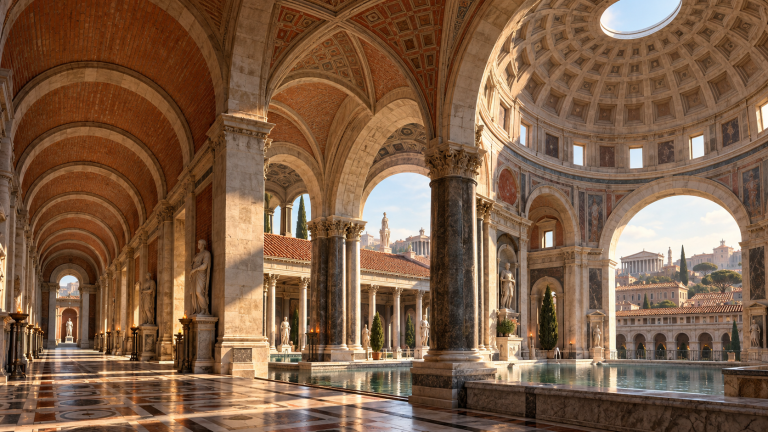
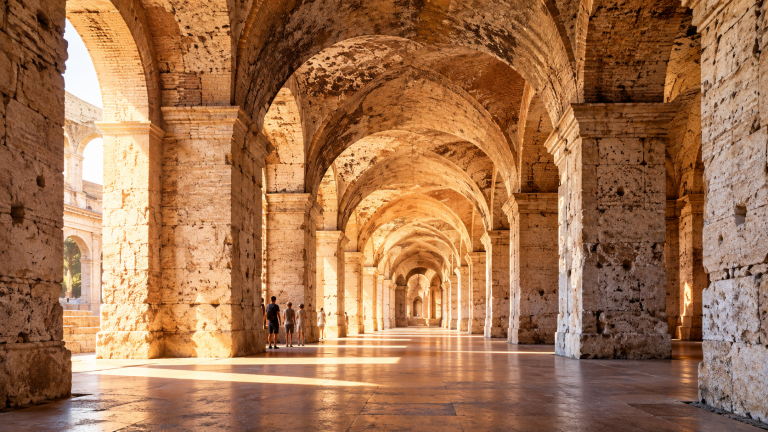
A groin vault was formed by the intersection of two barrel vaults at right angles. This structural solution represented one of the most important developments in Roman architecture because it made it possible to cover large spaces while allowing much…
The Barrel Vault

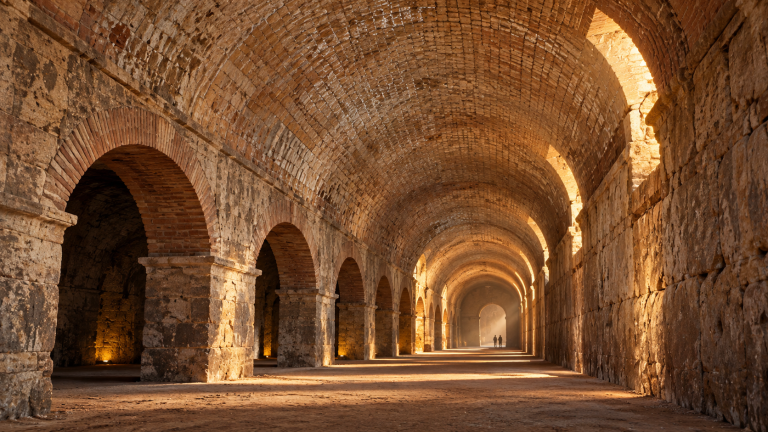
The simplest and one of the most commonly used Roman vaults was the barrel vault. It can be imagined as a semicircular arch extended along the entire length of a room. Because of this simple geometry, the barrel vault was…

The Arch as the Basis of Roman Construction

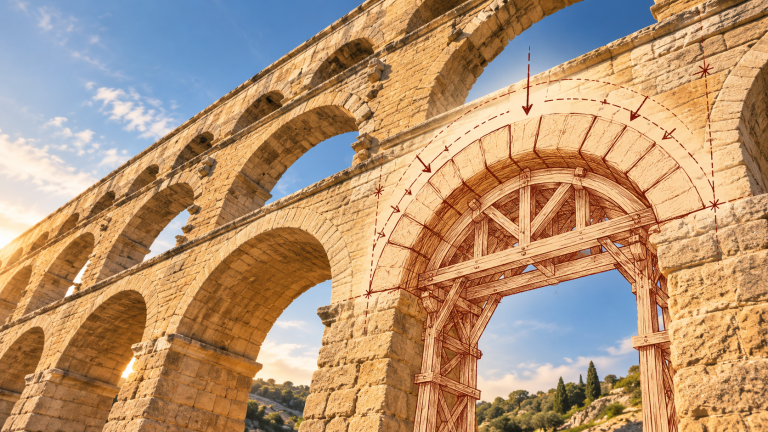
The fundamental element of Roman vaulted construction was the arch. Although the Romans did not invent it, they developed its use to a level that made possible the construction of bridges, aqueducts, monumental gateways, amphitheatres, baths, and vast interior spaces.…

Vaults, Domes and Roofs in Roman Architecture

One of the Romans’ greatest contributions to the history of architecture was the development of arches, vaults and domes. While their flat-ceiling constructions did not differ significantly from earlier Greek building solutions, it was in structures based on the arch…

Measures in the Roman Empire

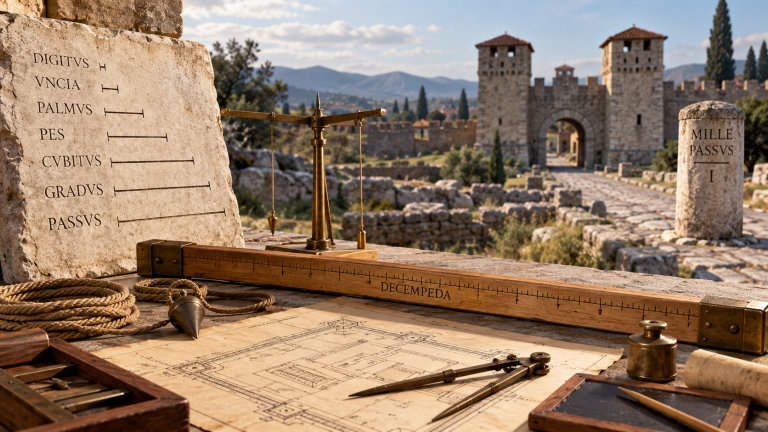
The Roman Empire extended across an enormous territory, from Britain to North Africa and from Hispania to the Middle East. For such a vast system to function effectively, it was necessary to have relatively standardised units for length, area, volume,…

Combining Different Materials

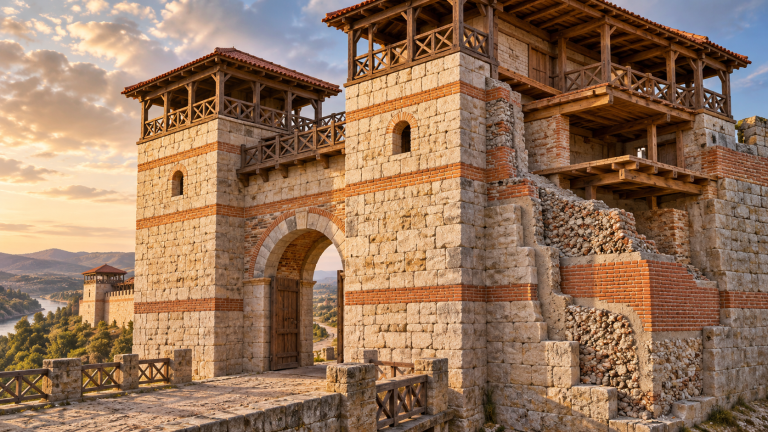
One of the most important characteristics of Roman architecture was the ability to combine different building materials within a single structure. Roman builders did not consider each material in isolation; instead, they used the particular advantages of each one where…

Earth, Gravel, and Rubble Stone

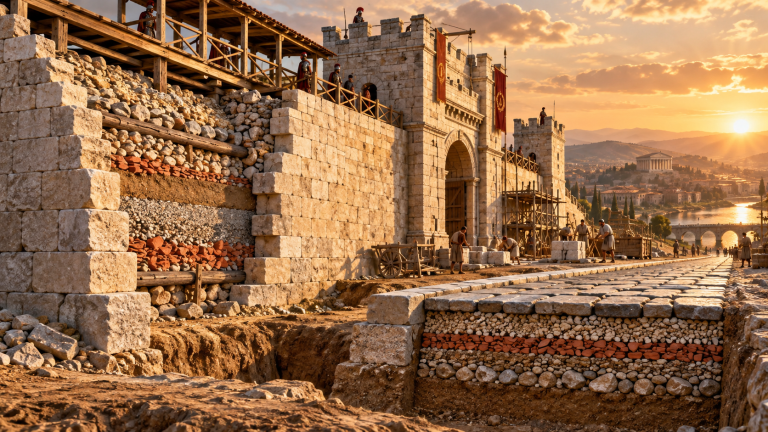
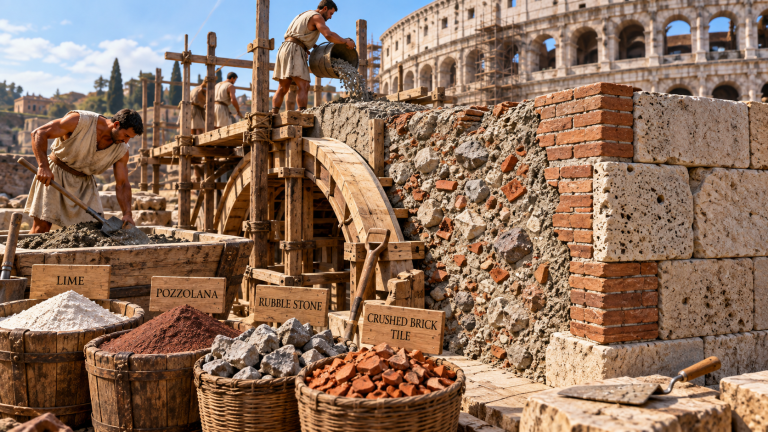
Roman construction did not rely solely on expensive and prestigious materials such as dressed stone, marble, or high-quality brick. On the contrary, a large part of Roman building technology depended on the use of simple, readily available materials such as…

Timber

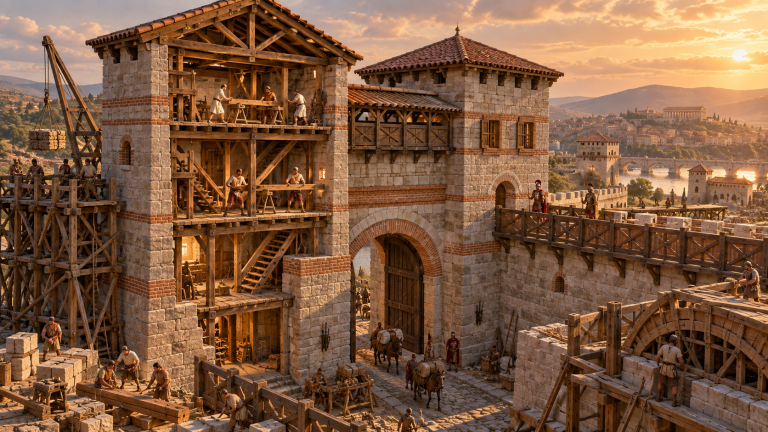
Although it is often almost invisible in the archaeological record, timber was one of the most important building materials of the Roman Empire. It was widely available, relatively easy to work, and could be used in almost every type of…

Roman Concrete – Opus Caementicium

One of the most important achievements of Roman construction was the widespread use of the material today known as Roman concrete – opus caementicium. Its development allowed Roman builders to move beyond the limitations of traditional cut-stone masonry and to…

Roman Mortar

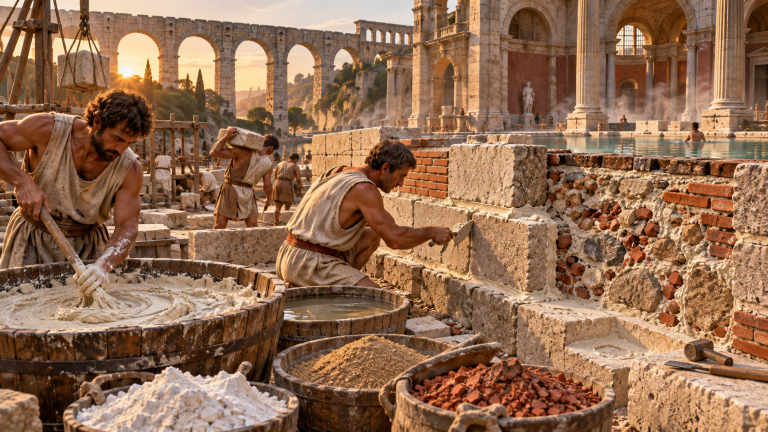
Without high-quality mortar, Roman architecture as we know it today would hardly have been possible. Mortar was not simply a material used to hold stones together; it was one of the essential components that gave Roman buildings their strength, stability,…